Linux already runs
the world.
Sasa tuiendeshe hapa.
Every supercomputer on earth. Most of the web. The phone in your pocket. All of it runs on a kernel that anybody can read, change and give away. This page explains what Linux actually is, how far it reaches, and how to put Ubuntu on the machine in front of you. No licence, no cost, no permission needed.
This is Tux.
He has been the face of Linux since 1996.
Linus Torvalds posts the first kernel to a Usenet group, calling it “just a hobby, won't be big and professional”.
comp.os.minix, 25 August 1991
of the world's 500 fastest supercomputers run Linux, every single one, for the eighth year running.
TOP500, November 2025
active Android devices, every one of them built on the Linux kernel.
Android market estimates, 2025
What Linux actually is
Almost everyone gets this wrong on the first try, and the confusion is what stops people before they start. Three different things share the name.
The kernel is not the operating system
Strictly, Linux is only the kernel, the layer that talks to your hardware. Everything you actually click on is stacked on top of it.
Example output. Three commands, three different answers: kernel, distribution, desktop.
The kernel
Written by Linus Torvalds in 1991 and still maintained in the open. It schedules processes, manages memory and drives your hardware. On its own it is not something you can use. It has no windows, no installer, no applications.
The distribution
A distro takes the kernel and wraps it in everything else you need: GNU tools, an installer, a package manager and a promise to keep it patched. Ubuntu, Debian, Fedora and Arch are all the same kernel, packaged by different people with different priorities.
The desktop environment
What the screen looks like: GNOME, KDE Plasma, XFCE, Cinnamon. This is a choice, not a fixed part of the system. Two people on the same distro can be looking at completely different desktops.
Free as in freedom
The kernel is released under the GPLv2, which is why none of this costs anything and why nobody can take it away. You may run it for any purpose, read every line of its source, change it to suit you, and pass your version on. That is not a marketing promise. It is a licence, and it is the reason a student in Dodoma and an engineer at a hyperscaler are running the same code.
How big Linux really is
Linux lost the desktop and won everything else. If you used the internet today, you used Linux, whether or not it was installed on your machine.
Every machine on the TOP500 list of the world's fastest supercomputers runs Linux, and has done without exception since November 2017. El Capitan tops the list at 1.742 exaflops, on Red Hat Enterprise Linux.
TOP500, November 2025 list
of websites whose operating system can be identified run a Unix-family system. Linux alone accounts for 61.7% of them, and Ubuntu leads the named distributions at 15.0% of Linux sites.
W3Techs, 2026
lines of source code in the kernel, roughly double what it was in 2015.
Kernel 6.14-rc1, January 2025
individual developers landed a change in the kernel across the 2025 cycle, from more than 1,780 organisations.
LWN kernel development statistics
of the world's phones run Android, a Linux kernel underneath a Google userland. Most people who have never heard of Linux carry it every day.
Global mobile OS share, late 2025
And everywhere else
Hundreds of distros, five families
The choice looks paralysing until you notice that nearly everything descends from a handful of ancestors. Learn the family and you have learned the branch.

Debian
since 1993
The largest community distribution, run by a volunteer project with a written social contract. Conservative, enormously well tested, and the base almost everyone else builds on.
Ubuntu · Linux Mint · Kali · Raspberry Pi OS · Parrot

Red Hat
since 1994
The enterprise lineage. RHEL is what large organisations buy support contracts for; Fedora is where the next version of everything gets tried out first.
Fedora · RHEL · Rocky · AlmaLinux · CentOS Stream

Arch
since 2002
Rolling release: no versions, just a continuous stream of the newest packages. You assemble the system yourself. Its wiki is the best Linux documentation anywhere, whatever distro you end up on.
Manjaro · EndeavourOS · BlackArch · SteamOS

SUSE
since 1992
The German enterprise line, strong across Europe. YaST gives it a genuinely good graphical administration tool, and Tumbleweed is a rolling release you can trust.
openSUSE Leap · Tumbleweed · SLES

Gentoo & Slackware
since 1993 / 2000
Slackware is the oldest distribution still maintained; Gentoo compiles everything from source for your exact hardware. Neither is a first Linux, and both will teach you more than any of the others.
Slackware · Gentoo · Funtoo
Pick Ubuntu. Move later.
Every Linux argument you will read online is between people who already use Linux. None of it matters yet. Ubuntu has the widest hardware support, the most answered questions, and a five-year support window, which means the thing you install today still works in 2031. Change distro when you have a reason, not before.
Why Ubuntu
Ubuntu is Debian made predictable: same foundations, fixed release dates, and a company behind it that is paid to keep the security updates coming.
“I am what I am
because of who we all are.”
Ubuntu is a Nguni Bantu word, and the idea it names, that a person is a person through other people, runs straight through Kiswahili and through Tanzania. Mark Shuttleworth chose it deliberately in 2004. An operating system built by strangers for strangers, given away, is about as literal a reading of the word as software gets.
Ubuntu 1.0 “Warty Warthog”, October 2004
Dates you can plan around
A release every six months, in April and October. Every fourth one is a Long Term Support release, April of every even year.
Five years of patches
An LTS gets five years of standard security updates, extendable to ten with Ubuntu Pro, free for personal use on up to five machines.
Software without hunting
Tens of thousands of packages, signed and one command away. No download sites, no installers of unknown provenance, no bundled toolbars.
Your error is already answered
Two decades of Ask Ubuntu and forum threads. Paste the message into a search box and somebody has hit it before you.
26.04, Resolute Raccoon
Released 23 April 2026. Supported with security updates until April 2031, so a machine installed today is still getting patches five years from now.
Download it from ubuntu.comTwo commands. Signed packages, resolved dependencies, no browser involved.
Linux is where security work happens
Penetration testing, digital forensics and vulnerability assessment are Linux disciplines, and the tooling ships as whole distributions. These six are the ones you will keep meeting, and they are a fast, concrete route into a career that Tanzania is short of.

Kali Linux
Built by penetration testers, with roughly 600 tools curated rather than dumped in. Metapackages group them by job: wireless, hardware, Bluetooth, so it stays navigable at any experience level.
Debian-based

Parrot OS
Positioned as a full portable laboratory, with as much weight on privacy and on building good security habits as on the tools themselves. Intuitive enough for newcomers.
Debian-based

BackBox
Forensics mode, tidily organised auditing tools, and Tor for privacy. Every tool carries a description, which makes it unusually good for learning rather than just running things.
Ubuntu-based

ArchStrike
Thousands of tools in a repository you add to and strip back at will. For professionals who want to build the toolkit rather than accept one.
Arch-based

BlackArch
Thousands of tools, listed alphabetically, with a sparse interface and little grouping. Powerful once you already know what you are looking for, not a starting point.
Arch-based

CAINE
Computer-aided investigative environment: disk and drive analysis with semi-automatic report generation, built to support every phase of an investigation. Advanced users.
Ubuntu-based
Distribution descriptions drawn from CompTIA, “6 Most Popular Linux Distributions for Ethical Hacking and Pen Testing”. Use these only on systems you are authorised to test.
Africa's first UbuCon
was held in Arusha
This is not something that happens elsewhere. In August 2025 the inaugural UbuCon Africa ran in northern Tanzania, co-located with DjangoCon Africa, and Canonical came to it.
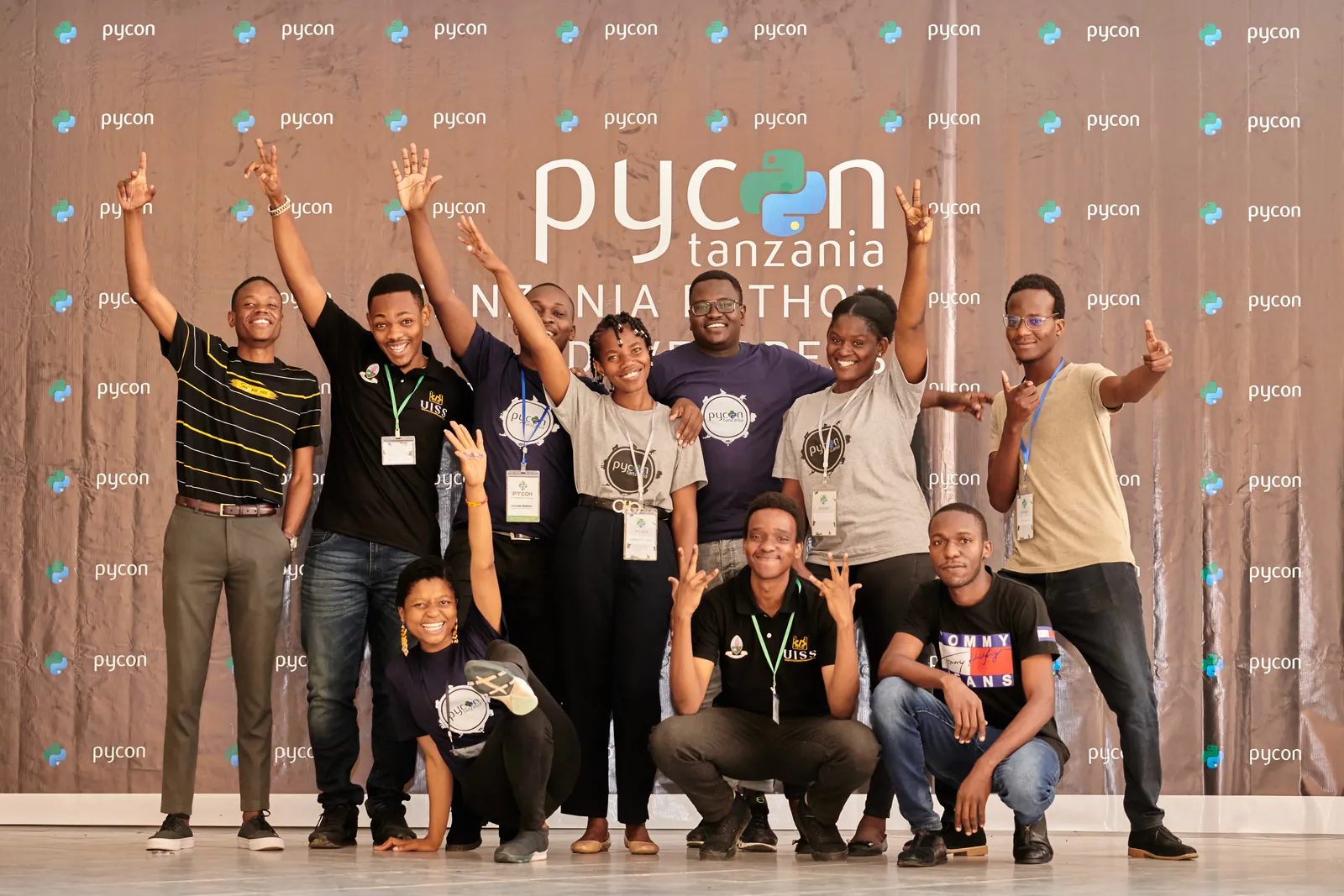
Tanzania's open source community
Pictured at PyCon Tanzania, the same organisers who brought DjangoCon Africa and UbuCon Africa to Arusha.
11–15 August 2025
Life Fitness Hall, Njiro, Arusha, Tanzania
of talks on programming, technology, careers, society and business.
of hands-on training and learning sessions.
ubuntu.com/blog
Canonical came to Arusha
The company behind Ubuntu sent engineering leadership and product teams: Ubuntu, OpenStack, Ceph, Launchpad and Multipass all presented. Sebastian Trzcinski-Clément and Daniele Procida attended as Directors of Engineering, and the Open Documentation Academy ran sessions on contributing without writing a line of C.
Alongside the technical programme were sessions on getting into the international software industry and on the routes into open source contribution, and Canonical, which already employs more than forty people across Africa, was hiring in the room.
Tanzania has done this before
The first DjangoCon Africa is held in Zanzibar, 200 people from more than 22 countries.
DjangoCon Africa returns to Tanzania, this time in Arusha, and the first UbuCon Africa runs alongside it.
From nothing to Ubuntu
in about an hour
You need a laptop, a USB stick of 8 GB or more, and a way to download roughly 6 GB. Nothing is irreversible until step four, and step three lets you use the whole system before you commit to anything.
Download the image
Get Ubuntu Desktop LTS from ubuntu.com. It arrives as a single .iso file of about 6 GB. Download it once, keep it. The same file installs as many machines as you like, which matters when bandwidth is metered.
Write it to a USB stick
Use Rufus on Windows, or Startup Disk Creator if you are already on Ubuntu. This erases the stick, so move anything off it first. Takes about five minutes.
Boot it and try it. Change nothing
Restart with the stick in and pick it from the boot menu, then choose Try Ubuntu. You are now running a complete system from the USB. Your hard disk has not been touched. Check your Wi-Fi works, check your sound works, browse the web.
Install alongside, or over
The installer offers to sit beside Windows and ask you which to boot each time, or to take the whole disk. Back your files up before this step regardless. This is the first point at which anything is written.
On a metered connection
Download the .iso once at a university, an office or a café, then install from that one stick as many times as you want, with no re-download and no connection needed during the install itself. It is the cheapest operating system to roll out across a lab in the country.
You do not need to be
a kernel developer to contribute
Most of what open source needs is not C. It is documentation nobody wrote, languages nobody translated into, and bugs nobody reported clearly.
Translate into Kiswahili
Ubuntu's translations are done by volunteers on Launchpad, string by string. Kiswahili coverage is thin, and every string translated is one more person who can use a computer in their own language. This is the single highest-leverage thing a Tanzanian can do for Linux, and it needs no code at all.
Write documentation
Canonical's Open Documentation Academy exists to teach exactly this, and it presented at UbuCon in Arusha. Docs are the most reliable first contribution in open source and the one maintainers are most grateful for.
Report and triage bugs
A reproducible bug report with your hardware, the version and the exact steps is real engineering work. Confirming somebody else's report is worth almost as much.
Find people near you
Ubuntu's LoCo teams are country-level volunteer groups that run install fests and release parties. Tanzania's technology community already gathers regularly. The Python and Django communities here have been running conferences since 2019, and the overlap with Linux is close to total.
Four links worth your time
The whole thing is free. That was always the point.
No licence key, no activation, no expiry, no account. Download it, copy it, hand it to a friend, put it on every machine in the lab. Nobody is going to send you a bill, and nobody can switch it off.